
Waste Bin Rental Malaysia: Sizes, Types & How to Choose for Your Business
RORO bins or wheelie bins — which one do you need? Sizes, costs, rental process, and what can go in each bin. Practical guide for renovation, construction, and commercial cleanup.
Chang Wei Jie
April 12, 2026
10 min read
You need to get rid of waste. Maybe it is a renovation project, a commercial clear-out, a construction job, or just an office that has accumulated years of stuff. Waste bin rental is the fastest way to handle it — but which bin, what size, and how does the process work?
We deliver bins across KL, Selangor, and Johor — everything from a small 2ft bin for a bathroom reno to a big 5ft container for a full demolition. This guide covers what types of bins are available, how to pick the right size, what you can and can't throw in, and how the whole rental process works from delivery to collection.
Waste Bin Rental Types Available in Malaysia
RORO Bins (Roll-On Roll-Off)

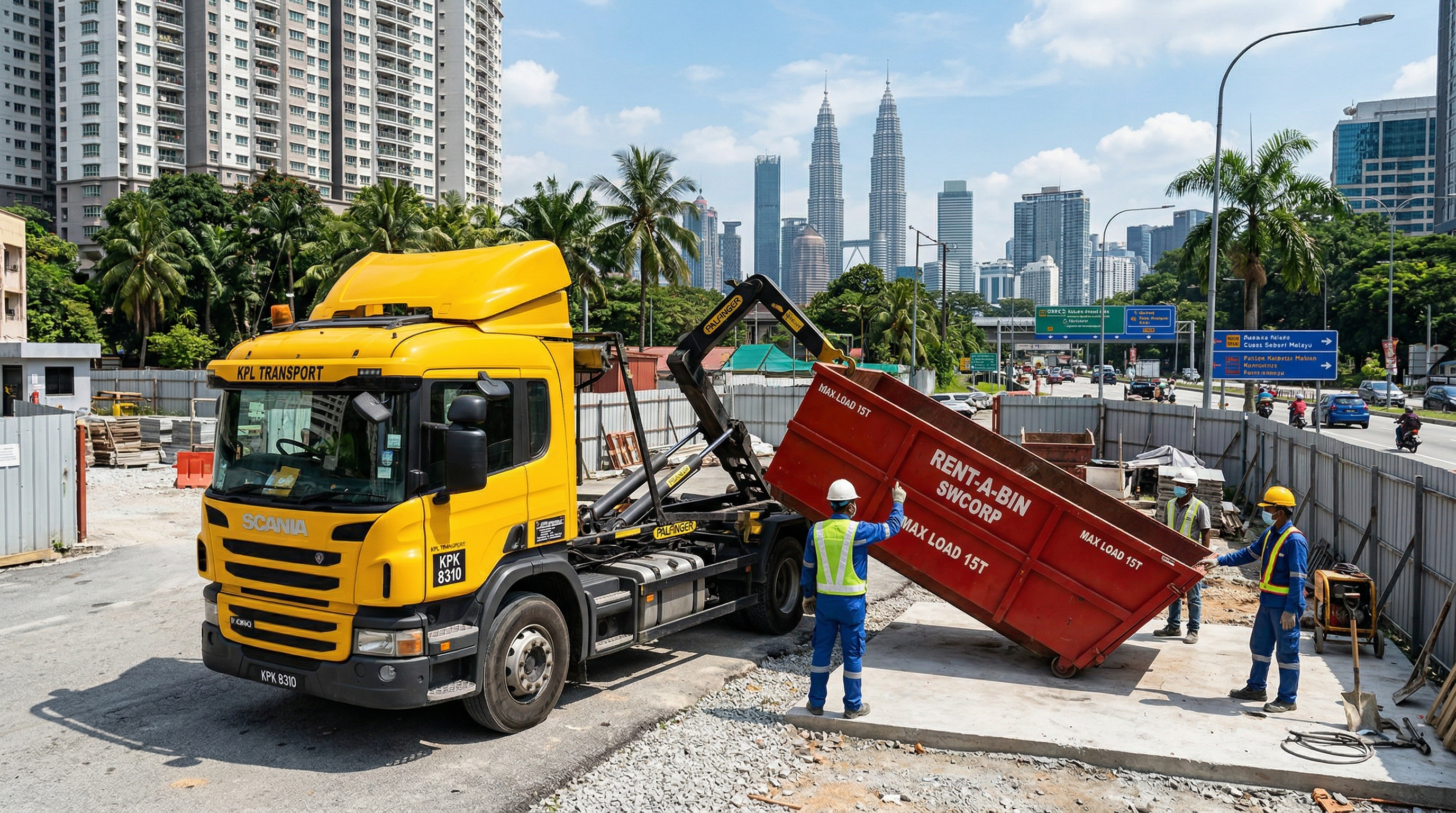
RORO bins are the standard container for construction, renovation, and large cleanup projects. They are delivered and collected using a lorry with a hook-lift system.
How they work: A lorry delivers the empty bin to your site. You fill it. When you are done, you call for collection. The lorry hooks the bin, rolls it onto the truck, and takes it away.
Best for: Renovation waste, construction debris, office clear-outs, factory cleanup, large-volume projects.
Sizes available:
| Size | Height | Best For | Typical Capacity |
|---|---|---|---|
| Small | 2ft | Heavy, dense waste: concrete, bricks, rubble, soil | ~2-3 tonnes |
| Medium | 4ft | Mixed waste: timber, metal, plasterboard, furniture | ~3-5 tonnes |
| Large | 5ft | High-volume projects: demolitions, commercial clear-outs | ~5-8 tonnes |
Key consideration: Bin height determines volume, but waste weight is what matters for transport. A small bin filled with concrete rubble weighs more than a large bin filled with timber offcuts. Choose based on your waste type, not just volume.
Wheelie Bins

Wheelie bins are the everyday waste containers for businesses with regular collection schedules.
How they work: Bins are placed at your premises on a long-term basis. A collection truck empties them on a scheduled basis (daily, twice weekly, weekly, etc.).
Best for: Ongoing daily waste from offices, restaurants, retail, and commercial premises.
Common sizes:
- 120L — Small offices, retail shops
- 240L — Medium businesses, restaurants
- 660L — Large commercial premises, food courts
- 1,100L — High-volume generators, hotels, factories
Key consideration: Collection frequency matters as much as bin size. A 240L bin collected daily holds more per week than a 660L bin collected twice weekly. Match both bin size and frequency to your waste generation pattern.
How to Choose the Right Bin
Step 1: Identify Your Waste Type
Different waste types have different weight-to-volume ratios and disposal requirements.
| Waste Type | Weight | Bin Recommendation |
|---|---|---|
| Concrete, bricks, rubble | Very heavy | Small RORO (2ft) — do not overload |
| Soil, earth | Heavy | Small RORO (2ft) |
| Mixed renovation waste | Medium | Medium RORO (4ft) |
| Timber, plasterboard | Light-medium | Medium or Large RORO (4-5ft) |
| Furniture, office clear-out | Light-medium | Large RORO (5ft) |
| General commercial waste | Light | Wheelie bin (240-1,100L) |
| Food / organic waste | Medium (wet) | Wheelie bin with daily collection |
Step 2: Estimate Your Volume
For one-off projects (renovation, clear-out):
- Small renovation (1 room, bathroom, kitchen): 1 medium RORO bin
- Full house renovation: 1-2 large RORO bins
- Office clear-out (50-100 desks): 1-2 large RORO bins
- Construction site: Multiple bins over the project duration, sized to waste phase
For ongoing operations:
- Small office (10-20 staff): 1× 240L wheelie bin, collected 2-3× weekly
- Restaurant: 1× 240L food waste (daily) + 1× 240L recyclables (2× weekly) + 1× 240L general (2× weekly)
- Hotel (100+ rooms): Multiple 660-1,100L bins, daily collection
- Factory: Scheduled RORO bins, depending on waste streams
Step 3: Check Site Access
Before ordering, confirm:
- Lorry access: RORO delivery requires a lorry with hook-lift. Ensure your site can accommodate a medium-sized lorry (turning space, overhead clearance, road width)
- Placement area: The bin needs a flat, stable surface. Soft ground may not support a loaded RORO bin
- Public land permits: If the bin must be placed on a road, sidewalk, or common area, most local councils require a temporary obstruction permit. Check with DBKL, MBPJ, MBJB, or your local authority
- Height restrictions: Covered car parks and basements may not accommodate RORO bins. Measure clearance before ordering
What Can Go in a Rental Bin
Accepted Waste (General RORO Bin)
- Concrete, bricks, rubble, tiles
- Timber, wood, plywood
- Metal, steel, rebar
- Plasterboard, drywall
- Furniture, mattresses
- Cardboard, paper, packaging
- General household / office waste
- Garden waste, soil, earth
- Plastic, PVC pipes
Need Waste Management Help?
Get a free quote for professional waste collection, disposal, and recycling services across Malaysia.
Request a QuoteNOT Accepted
| Prohibited Item | Why | What to Do Instead |
|---|---|---|
| Asbestos | Hazardous — requires DOE-licensed handler | Contact DOE-licensed scheduled waste company |
| Chemicals, solvents, paint | Hazardous / scheduled waste | DOE-licensed handler |
| Batteries | Hazardous | E-waste recycler or scheduled waste handler |
| Gas cylinders / pressurised containers | Explosion risk | Return to supplier or specialist handler |
| Tyres | Require specialist disposal | Tyre recycler |
| Medical / clinical waste | Biohazard — separate regulations | Licensed clinical waste handler |
| Electrical / electronic waste | E-waste regulations apply | DOE-registered e-waste recycler |
| Flammable liquids | Fire risk | DOE-licensed handler |
Important: Mixing prohibited items into a general waste bin can result in the entire load being rejected at the disposal facility, additional charges, or regulatory penalties. If you are unsure whether something can go in the bin, ask your waste collector before loading.
The Waste Bin Rental Process: Step by Step
1. Request a Quote
Contact the waste collector with:
- Your project type (renovation, construction, clear-out, etc.)
- Waste type (what you are disposing of)
- Estimated volume
- Delivery address
- Preferred delivery date
2. Confirm and Schedule
The collector confirms bin size, price, and delivery date. Same-day delivery is available for orders placed before 12 PM in KL, Selangor, and Johor (subject to availability). Standard delivery is 24-48 hours.
3. Delivery
The bin is delivered to your site on a hook-lift lorry. The driver will place it in your specified location. Ensure the area is clear and accessible before delivery.
4. Fill the Bin
Standard rental includes 7 days. Extensions are available at a daily rate.
Loading tips:
- Fill evenly — do not load all heavy material on one side
- Do not exceed the rim line — overloaded bins cannot be safely lifted
- Keep prohibited items out
- Separate recyclable materials if possible (metals, clean timber) — some collectors offer recycling credits
5. Collection and Disposal
Contact the collector when the bin is full or your rental period ends. The lorry returns, hooks the loaded bin, and transports it to a licensed disposal or recycling facility.
After collection, you receive a record of the disposal — weight, destination facility, and disposal method. This is your proof of legal disposal.
Waste Bin Rental Cost Factors
Waste bin rental pricing in Malaysia depends on several variables:
| Factor | Impact on Price |
|---|---|
| Bin size | Larger bins cost more |
| Waste type | Heavy waste (concrete, soil) costs more due to weight-based disposal fees |
| Location | Distance from disposal facility affects transport cost |
| Rental duration | Standard 7 days; extensions at daily rate |
| Disposal method | Landfill disposal costs RM95.5/tonne at Jeram; recyclable waste may cost less or generate revenue |
| Access difficulty | Sites requiring special delivery (narrow roads, restricted hours) may incur surcharges |
Typical starting price: RORO bins from RM260, including delivery, 7-day rental, and pickup. Disposal fees are additional and depend on waste weight and type.
Cost-saving tip: Segregate recyclable materials (especially metal) before loading. Metal scrap at RM1,400-1,800/tonne can offset or exceed your disposal costs. A bin of mixed renovation waste costs you money. A bin of separated metal earns you money.
Regulations for Bin Placement
On Private Property
Generally no permit required if the bin is within your site boundary (construction site, factory compound, private car park).
On Public Roads or Sidewalks
Most local councils require a temporary obstruction permit:
- DBKL (Kuala Lumpur) — apply through local DBKL office
- MBPJ (Petaling Jaya) — permit required for roadside placement
- MBJB (Johor Bahru) — permit required
Processing time varies: typically 3-7 working days. Apply before your project starts.
Residential Areas
Additional considerations:
- Noise restrictions may limit delivery and collection to daytime hours
- Bins should not block pedestrian walkways or fire access
- Some residential management corporations have specific rules about bin placement
Frequently Asked Questions
How long can I keep a rental bin?
Standard rental is 7 days. Extensions are available at a daily rate — typically RM30-50 per day depending on bin size. For construction projects lasting weeks or months, discuss a project-rate with your collector. Long-term rates are usually better value than repeated short-term rentals.
What happens if I overfill the bin?
Overfilled bins — waste above the rim line — cannot be safely lifted and transported. The collector may refuse to collect until the load is reduced, or charge an additional fee to bring a second bin for the overflow. Load evenly and stay below the rim.
Can I have multiple bins at the same time?
Yes. Construction sites commonly have 2-4 bins on site simultaneously, often for different waste types (one for concrete, one for metal, one for general). Multiple bins support better segregation and can reduce disposal costs through material recovery.
Do I need to be on site for delivery and collection?
For delivery, someone should be on site to direct the driver to the placement location. For collection, the bin should be accessible and the driver needs clear access to hook and lift. If no one will be on site, confirm the placement and collection arrangement with the collector in advance.
Is there a weight limit for rental bins?
Yes. Each bin size has a maximum weight capacity based on transport safety limits. Small RORO bins (heavy waste) typically max at 3-4 tonnes. Larger bins for lighter waste can hold more volume but may have similar weight limits. Your collector will advise based on your waste type. Overweight bins incur additional transport charges and may require a second trip.
The Bottom Line
Choosing the right bin is straightforward: match the bin type and size to your waste type and project scale. Heavy waste gets a small bin. Light bulky waste gets a large bin. Ongoing operations get wheelie bins on a schedule.
The process is simple — book, deliver, fill, collect. The key decisions are: what size, how many, and whether to segregate for recycling (which usually saves money).
Need a Bin Delivered?
GarGeon delivers RORO bins across KL, Selangor, and Johor. Same-day delivery available. Every collection documented with weight and disposal destination.
References
Related Reading:
Need a bin delivered?
Same-day delivery in KL, Selangor & Johor. RORO bins from RM260.
Request a QuoteChang Wei Jie
Content Strategist
Content strategist covering waste management, sustainability, and ESG topics for Malaysian enterprises.


